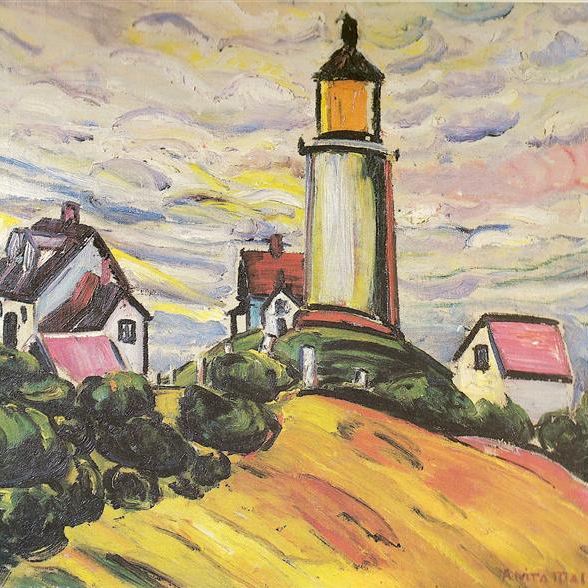
Punto de equilibrio*
Aunque continúa el vencejo
su dibujo de elipsis por encima del tejado,
y delante, el sendero veraniego se extiende,
el solsticio de junio—aquel punto de inflexión—
me perturba.
Jugué a que no existe y tropecé,
fui árbol carbonizado, piel raspada,
el canto de palmera y desabrido olor.
En el vuelo de Las Parcas sobre el río
(en aquella pintura de la Quinta del Sordo),
o sobre el pueblo los amantes de Chagall,
el ansia de llegar, como las tabas lanzadas
desde pequeñas manos, a su apogeo,
y permanecer en infinita levedad.
Fui luna de ciervo, higo verde y pétalo seco,
huellas de tiempo en el aire.
Mar adentro
Incorpóreo en este mundo
azul esmeralda.
Buceo en los rayos de sol
que atraviesan las nubes de arena.
Abajo los peces se mecen
con el vaivén de las aguas.
Tus compañeros flotan inertes
en la pecera al lado de tu cama.
(Recuerdo tu foto detrás del cristal
con los peces dorados.)
Una medusa se avecina de la nada,
toda tentáculos marrones, agitándose.
Te zambulliste mar adentro.
A tu lado, la pecera vacía.
Into the Deep
Disembodied in this
blue emerald world.
I dive in rays of sun
that shine in clouds of sand.
Below fish rock
in the ebb and flow.
Your friends float inert
in the bowl beside your bed.
(I recall your photo behind
the glass with the goldfish.)
A jellyfish looms out of nowhere,
all waving brown tentacles.
You dived into the deep.
By your side the empty fishbowl.
Snap
Entre vaqueros y camisetas blancas,
un calcetín limón tendido con una pinza,
una curva soleada que sonríe en la brisa.
Su pareja verde suelta una lágrima.
Gesto virtual que parece real
en los ojos del amante que espera.
La tarde cruje como un cubo de hielo
que se hunde en un vaso de agua.
Snap
Between jeans and a white shirt,
a pegged lemon sock.
Sunny curve that smiles in the breeze.
Its green companion drops a tear.
Virtual gesture that looks real
in the eyes of the waiting lover.
The afternoon cracks like an ice cube
sunk in a glass of water.
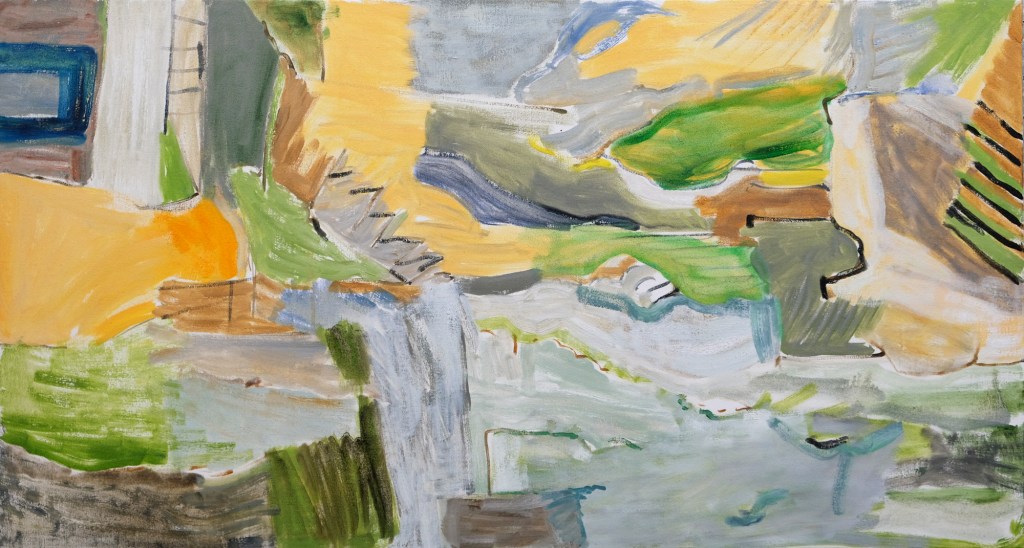
Ventana interior (Inner Window) by Charles Olsen, 2021, oil on canvas, 49.5 x 93 cm.
Ya es la noche
La Granja de San Idelfonso
Bombillas dan inicio a la escena:
reflejo anaranjado en la suave fachada de piedra,
la ventana, rectángulo blanco,
cortinas y persianas, líneas tenues,
y una farola dibuja sombras
tras los pinos.
Se apaga una luz.
El cielo añil sobre las montañas,
ahora indescifrables en la oscuridad.
Ladra un perro. Bajan una persiana.
Un coche por la carretera.
Tambalean los platos en la cocina.
Un murciélago vuela frente a mí.
Repetido golpe, los zapatos
en manos de la pequeña figura
en el rectángulo blanco.
Desde el salón me llama mi esposa.
La ventana de par en par, marco blanco
de un lienzo negro, ese cuadrado
de húmedo frío que entra en la habitación.
Apago la lámpara del escritorio.
De vuelta el contorno añil.
Diminutos insectos se posan sobre la página.
Nightfall
La Granja de San Idelfonso
Lamps give the scene form:
an orange cast on the soft stone façade,
a window, white rectangle,
curtains and blinds, tenuous lines,
and a streetlamp draws shadows
behind the pines.
A light goes out.
The sky indigo over the mountains,
now indecipherable in the dark.
A dog barks. A blind lowered.
A car along the main road.
Plates rattle in the kitchen.
A bat flits before me.
A repeated banging, shoes
in the hands of the small figure
in the white rectangle.
From the living room my wife calls.
The open window, white frame
on a black canvas, this rectangle
of damp cold that enters the room.
I turn off the desk lamp.
The indigo contour returns.
Small insects alight on the page.
Tierra de juegos
Dunedin, 1975
La voz de mamá llega a donde juego
en la escalera del jardín, Ye banks and braes
o’ bonnie Doon. Los cánticos del domingo,
la euforia del tui que alborota la calle, y los días
en el marae donde, corriendo libre,
escucho la melodía de un lino ondulante.
En el castillo de Larnach, las ortigas pican
mis manos traviesas, o aquella vez que acariciamos temblorosos
pájaros atrapados en plastilina rosa y los salvamos,
o desenterramos conchas de arenas húmedas y
en equilibrio las gaviotas desafían el viento hacia el mar…
Tiene generosidad el huerto,
mi comida: guisantes, la grosella espinosa ácida y
–según mi hermana– bocados de arena seca.
Ye banks and braes o’ bonnie Doon: ‘Orillas y laderas del bello Doon’ del poeta escosés Robert Burns.
tui: mielero tui, pájaro nativo de Nueva Zelanda.
marae: lugar de encuentro del la comunidad maorí.
Touching Land
Ōtepoti, 1975
Mum’s voice gently drifts out to where I play
on the back laundry step, Ye banks and braes
o’ bonnie Doon. Church hymns on a Sunday,
the tui sings across the street, and days
out at the marae where, running free, I
hear the waiata of shifting flax.
Up at Larnach Castle nettles sting my
small hands, and that time we stroked trembling waxeyes
stuck in pink playdough and dug them free,
or scooped out shells from hard spray-damp sands as,
poised, karoro caught the wind out to sea…
The vege patch manaakitanga has—
my kai are pea pods, tart gooseberry and
(so my sister says) dry handfuls of sand.
*Punto de equilibrio was first published in Occulta Verita (Juan Moro and various authors, Olifante Ibérico, 2024). Mar adentro and Snap are from Antípodas (Huerga y Fierro, 2016). Ya es la noche and Tierra de juegos are from La rebeldía del sol (Olifante, 2022).
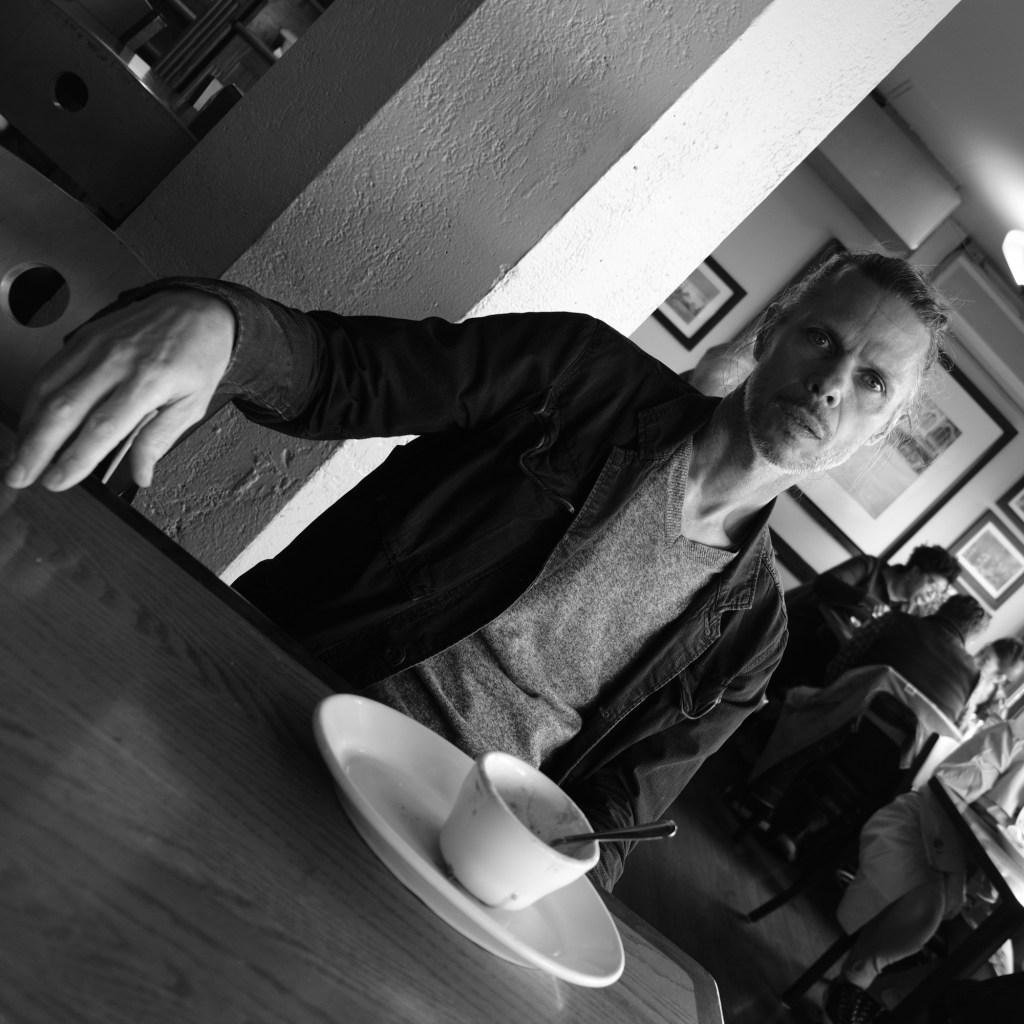
Charles Olsen (Nelson, Aotearoa New Zealand, 1969). Charles moved to Spain in 2003 inspired by Spanish artists such as Velázquez and Goya, and to further his studies in flamenco guitar. A multidiscipline artist, he moves between painting, writing, photography and audiovisual work.
His latest poetry collection, result of the III Antonio Machado Poetry Residency of Segovia and Soria he received in 2018, is La rebeldía del sol (‘Rebellious Sun’, Olifante Ediciones, 2022). His writings and translations have appeared in Landfall, Poetry NZ Yearbook, Cordite Poetry Review, Blackmail Press, Neke, Almanacco dei poeti e della poesia contemporanea, El País, Turia and Trasdemar.
As well as making award-winning poetry films, such as the collaborative te reo Māori film Noho Mai, which won Best Poetry Film in the 8th Ó Bhéal Poetry Film Competition in Ireland, he has published articles about poetry film in Spain, Portugal, Colombia and Aotearoa New Zealand. Since 2016, he has run the poetry competition Given Words for New Zealand’s National Poetry Day.
He continues painting in watercolours and oils and his work has been shown in Madrid, Barcelona, Oporto, Paris, Wellington, and at the Saatchi Gallery, London. See his work at https://charlesolsen.es and on Instagram: @colsenart.
 Farol: Journal of literature and other arts