(Introdução)
No início de A Condição Humana, Hannah Arendt afirmava «Os homens, e não o Homem, vivem na Terra e habitam o mundo.» De facto, este Homem, no singular e em maiúscula, pode parecer-nos demasiado abstrato e vazio, algo que não podemos ver de frente nem sentir o pulso. Fernando Pessoa parecia advertir já para a artificialidade dessa mesma abstração genérica e desvitalizada: «Falaram-me os homens em humanidade, / Mas eu nunca vi homens nem vi humanidade. / Vi vários homens assombrosamente diferentes entre si. / Cada um separado do outro por um espaço sem homens.» A humanidade assim concebida é muito diferente do ser humano de carne e osso, composto de sangue, músculos, ossos e sonhos, desses homens plurais, «assombrosamente diferentes entre si», que um conceito unitário e maiúsculo pode ocultar e esquecer. Em 1944, em pleno epicentro de um genocídio, o filósofo Ludwig Wittgenstein escrevia: «Nenhum clamor de tormento pode ser maior do que o clamor de um homem. Ou, mais uma vez, nenhum tormento pode ser maior do que aquilo que um único ser humano pode sofrer. O planeta inteiro não pode sofrer tormento maior do que uma única alma.» Pensar a dor ou a condição apenas em termos coletivos pode fazer-nos esquecer a singularidade e a diferença. Do mesmo modo, o esvaziamento de sentido que a extensão numérica frequentemente traz consigo pode afastar-nos do essencial: o percurso irrepetível de um único ser sobre a Terra.
Mas esta Humanidade pode também encerrar um outro sentido, entre tantos possíveis: o da potencialidade de um amor maior e em contínua expansão. A poesia enquanto revitalização, regeneração e ampliação do mundo abre um espaço de empatia que contém em si os contrassensos e os opostos. A ordem que ela inaugura é, por isso mesmo, mais complexa e mais plural. Abre o nosso olhar para esses «homens assombrosamente diferentes entre si», mas também para aquilo que partilham. O seu eu confunde-se frequentemente com um nós. Quando Mutimati Barnabé João escreve: «Eu o povo moçambicano vou conhecer todas as minhas forças», amplia poeticamente o nosso mundo conhecido. É então um começo sem volta atrás. A poesia aumenta, regenera e revitaliza o mundo — o nosso mundo —, ao qual gosta de estar atenta e do qual se torna indissociável. Por amor ao mundo o mundo todo. Num outro sentido, a palavra humanidade pode significar empatia, intensidade e vitalidade, correspondência com aquilo que há de mais divino e de mais animal, de mais humano e de mais central em nós, aquilo que o humanista italiano Pico della Mirandola considerava o único milagre. Para os gregos antigos, humanidade era um verbo, um tornar-se humano, mais do que um estado adquirido. Seja essa humanidade aquilo que for na sua potência solar, animal e divina é a ela que a poesia nos ajuda a corresponder, com maior sinceridade e entrega, a poesia aumenta o mundo.
Nuno Brito, Cidade do México, 7 de Julho de 2026.
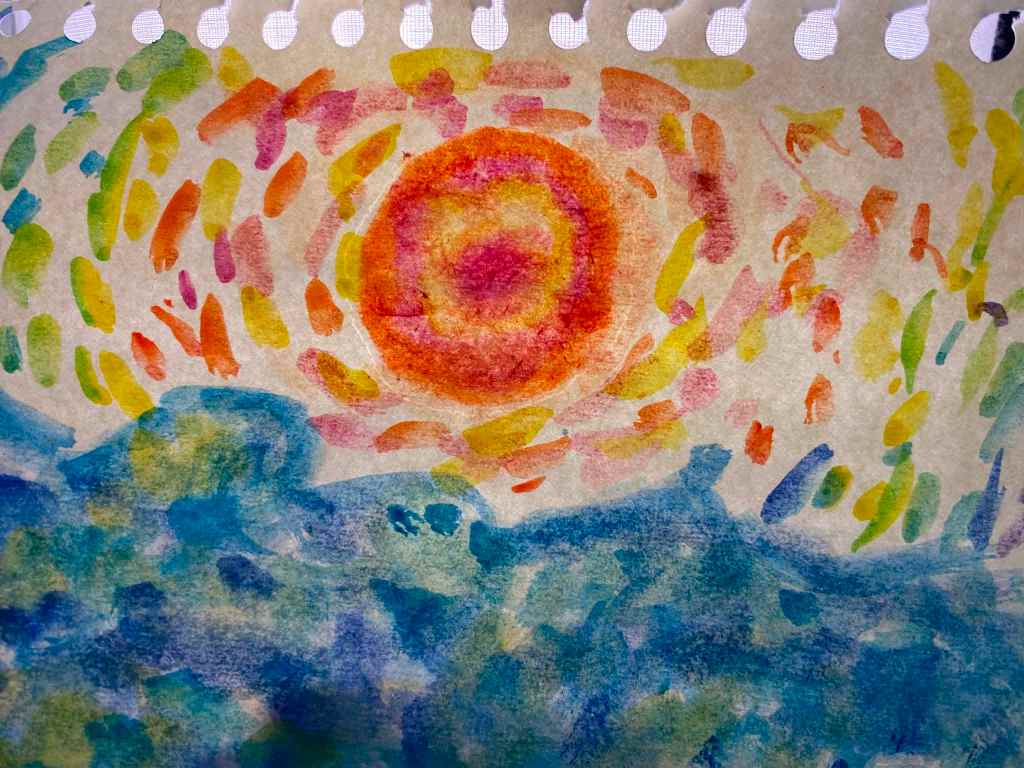
Farol #6
A poesia aumenta o mundo
Capa: Gisel Brito
At the beginning of The Human Condition, Hannah Arendt wrote: “Men, not Man, live on the earth and inhabit the world.” Indeed, this Man, singular and capitalized, may strike us as overly abstract and empty—something we can neither look in the eye nor feel the pulse of. Fernando Pessoa seemed already to warn against the artificiality of this same generic and lifeless abstraction:
“They spoke to me of humanity,
But I have never seen men nor have I seen humanity.
I have seen various men astonishingly different from one another.
Each separated from the other by a space without men.”
Humanity conceived in this way is very different from the flesh-and-blood human being, made of blood, muscles, bones, and dreams—from those plural human beings, “astonishingly different from one another,” whom a singular, capitalized concept may conceal and forget. In 1944, at the very epicenter of a genocide, the philosopher Ludwig Wittgenstein wrote: “No cry of torment can be greater than the cry of one man. Or again, no torment can be greater than what a single human being can suffer. The whole planet cannot suffer greater torment than a single soul.” To think about suffering or the human condition only in collective terms may cause us to overlook singularity and difference. Likewise, the loss of meaning that numerical magnitude so often entails can distance us from what is essential: the unrepeatable journey of a single being upon the earth.
Yet Humanity may also encompass another meaning, among many possible ones: that of the potential for a greater love, one that is continually expanding. Poetry, as a force of revitalization, regeneration, and enlargement of the world, opens a space of empathy that embraces contradictions and opposites within itself. The order it brings into being is therefore more complex and more plural. It opens our gaze to those “men astonishingly different from one another,” but also to what they share. Its I often merges with a we. When Mutimati Barnabé João writes, “I, the Mozambican people, shall come to know all my strength,” he poetically enlarges the world we know. From that moment on, there is no turning back. Poetry enlarges, regenerates, and revitalizes the world—our world—to which it remains attentively devoted and from which it becomes inseparable. For love of the world, the whole world.
In another sense, the word humanity may signify empathy, intensity, and vitality; a correspondence with what is most divine and most animal, most human and most essential within us—what the Italian humanist Pico della Mirandola regarded as the only true miracle. For the ancient Greeks, humanity was a verb, a becoming human, rather than an accomplished state. Whatever this humanity may be in its solar, animal, and divine potential, it is toward that humanity that poetry helps us respond, with greater sincerity and deeper surrender. Poetry enlarges the world.
 Farol: Journal of literature and other arts